
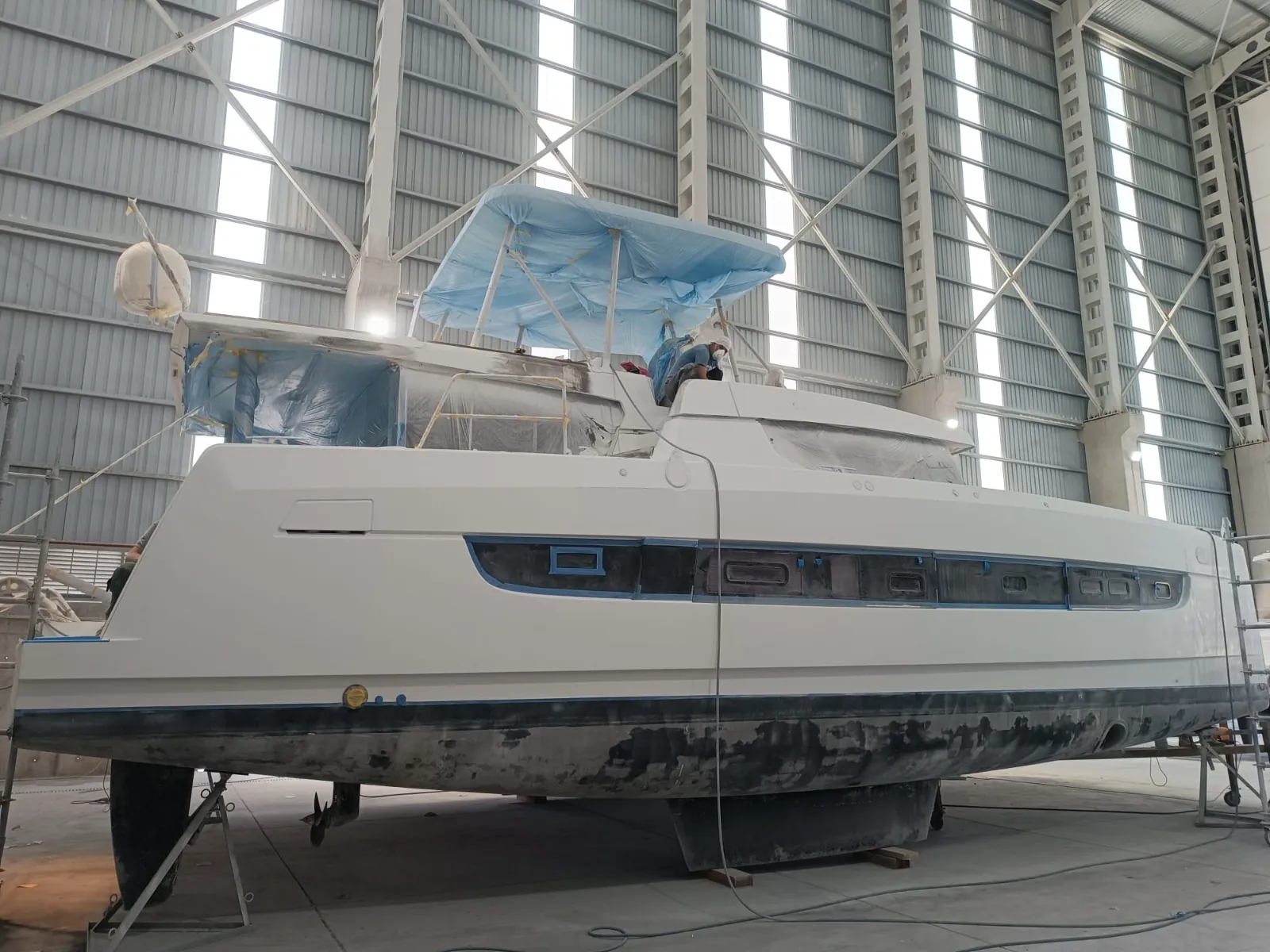
Marine fouling that sticks to the bottom of the boat significantly negatively affects the boat's manoeuvrability and speed values due to the friction force they create. This effect visibly reduces the boat's speed by a ratio of 1/4.
While a boat with a clean bottom can reach a speed of 6 knots at 2500 RPM, this speed drops to 4 knots when the same boat's bottom is exposed to marine fouling. This situation both increases fuel consumption and seriously reduces cruising comfort.
Antifouling, on the other hand, prevents these organisms from growing after they stick to the bottom of the boat, ensuring they fall off while they are still small and helping the water flow under the boat without encountering any obstacles. In this way, boat performance is maintained, fuel savings are achieved and the boat bottom surface remains clean for a long time.
Antifouling Application Stages
For antifouling application to be long-lasting and effective, it must be done with the correct methods and in accordance with specific rules.
1. Surface Preparation
The hull bottom of the boat should be cleaned thoroughly with sandpaper. Using water during the sanding process yields better results. Residues of antifouling applications previously made on the boat should be thinned down significantly. A clean, smooth and even surface directly affects the adhesion quality of the paint.
2. Number of Paint Coats and Thickness
Applying multiple coats of antifouling to an unthinned hull bottom both increases the weight of the boat and causes previous paint layers to thicken more than necessary. This can lead to loss of performance and the paint peeling off the surface over time.
3. Use of Primer
If the brand and properties of the antifouling previously applied to the bottom of the boat are unknown, an antifouling primer must be applied, and the antifouling should be painted over this primer. In applications made without primer, the paint cannot adhere sufficiently to the surface and peeling occurs in a short time.
4. Waiting Time Between Coats
It is essential to wait while applying intermediate coats of antifouling. This period should be an average of 4–5 hours. Also, during this waiting period, the antifouling should not be left in direct sunlight. Paint exposed to the sun for a long time dries prematurely or its structure deteriorates.
5. Painting Cradle Areas
When applying antifouling, paint is not applied to the cradle areas holding the boat. Paints applied to these areas just before the boat is launched into the water dissolve within a few days. For this reason, application to the cradle areas should be done within the normal process and without rushing.
6. Extra Coat for Areas Exposed to Sun
More coats of antifouling should be applied to areas of the boat exposed to the sun because marine fouling grows faster with sunlight. Applying an extra coat to these areas provides long-term protection.
Benefits of Antifouling Application
- Provides a visible increase in boat speed
- Reduces fuel consumption
- Increases manoeuvrability
- Keeps the boat bottom surface clean for a long time
- Reduces maintenance costs
- Maintains boat performance at the maximum level
Importance of Professional Antifouling Application
Antifouling application is not just about painting. Correct product selection, surface preparation, application technique and coat planning are of great importance. For this reason, antifouling processes must be carried out by expert teams using professional equipment and quality materials.
This post is about our Compounding, Polishing & Antifouling service.