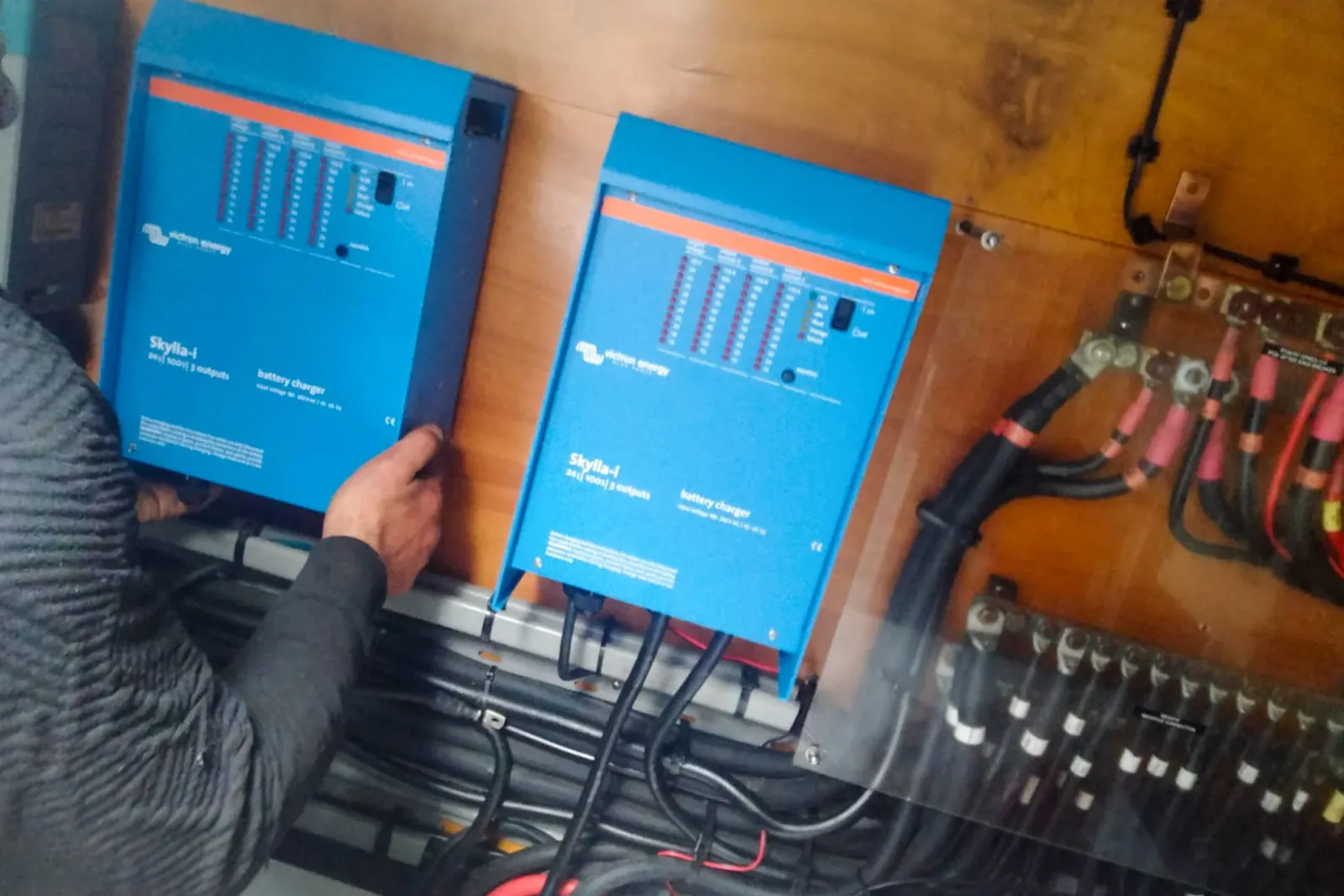
Electrical System Fault Diagnosis and Repair
An electrical system is a complex network designed to meet a structure’s energy needs. Its proper operation is extremely important for both comfort and safety. Over time, however, faults can occur for a variety of reasons.
Fault Diagnosis
- Visual Inspection: As a first step, every component of the system, such as the distribution panel, sockets, switches and cables, should be inspected carefully. Abnormalities such as burn marks, cracks or deformation may be visible.
- Voltage Test: Voltage at sockets and circuits should be checked with a multimeter or voltage tester. Low or absent voltage may indicate a fault.
- Circuit Check: Each electrical circuit should be checked in turn to identify problems such as blown fuses or circuit breaker issues.
- Short-Circuit Detection: A short circuit can cause serious problems in the system. To find one, you can start by opening the circuit and checking each cable connection.
- Load Test: The system should be tested under load. This shows whether circuits are overloaded or how a faulty component affects the flow of power.
Repair Process:
- Identifying Faulty Components: After fault diagnosis, the faulty components should be identified. This often means replacing cables, sockets or switches.
- Safety Precautions: Before any repair work, all power sources should be switched off and the necessary safety precautions taken. Protective equipment (gloves, goggles) should be worn.
- Replacing Cables: Faulty cables should be replaced, new cables connected properly and the necessary insulation applied.
- Replacing Sockets and Switches: Damaged sockets or switches should be replaced with new ones. During installation, make sure the connections are correct.
- Distribution Panel Check: Fuses and circuit breakers should be checked to make sure the distribution panel is working properly. New fuses should be added where necessary.
- Testing and Inspection: Once the repair is complete, the system should be tested again. Voltage tests should be carried out and circuits checked under load to make sure there are no problems.
Inverter Installation
Inverter systems are essential on boats for meeting electrical demand and running a range of electrical appliances safely. An inverter converts the boat’s direct current (DC) into alternating current (AC), so household appliances can run on board without problems. The most important point when installing an inverter is that its power and capacity match the energy needs of the appliances that will be used on board.
The inverter’s location should be chosen carefully during installation: a well-ventilated spot protected from vibration and moisture is preferred. Correct battery connections and cabling are also critical for the unit to operate safely. Using fuses and safety devices when integrating the inverter into the boat’s power system prevents potential electrical problems. In addition, regular checks and maintenance after installation keep the inverter running efficiently for longer.